Sage Custom Loaf™ BBM800BSSUK
£248.77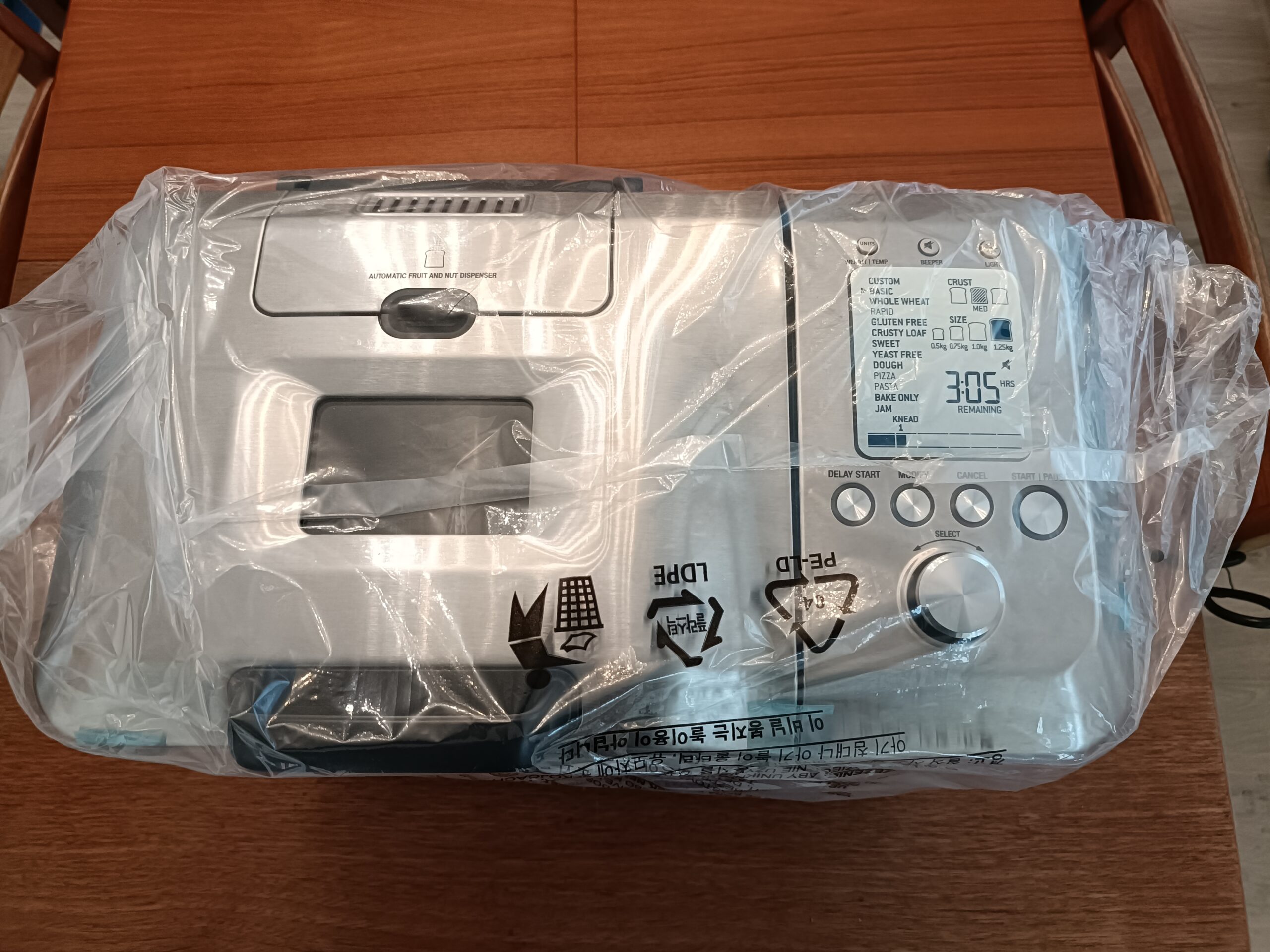
Pros
- Multiple manual and automatic programs
- Clear smart LCD screen
- Collapsible kneading blade
- Automatic fruit and nut dispenser
- Power interruption protection
Cons
- Large (41.7 cm long, 24.4 cm wide, 33.8 cm high)
- Collapsible kneading blade needs careful cleaning after use
- Bowl needs to be hand washed after use
Before I start with the Sage Custom Loaf breadmaker review, I do have some experience with bread makers in the past. I had an unbranded one that I’d bought from Tesco and had for many years.
Whilst it performed well with basic loaves, it did take me many, many failed attempts to get a loaf to rise properly. I wasted a lot of flour and yeast during this time, getting the recipe and temperature of the water right.
Eventually I managed to find a formula which worked in the machine, which basically revolved around having the water at the correct temperature, otherwise the yeast just wouldn’t play ball.
I was extremely excited to get a premium bread maker, although I was nervous in case I experienced the same issues getting a loaf to rise. Read on, to find out if I was right to be nervous…
Sage Packaging
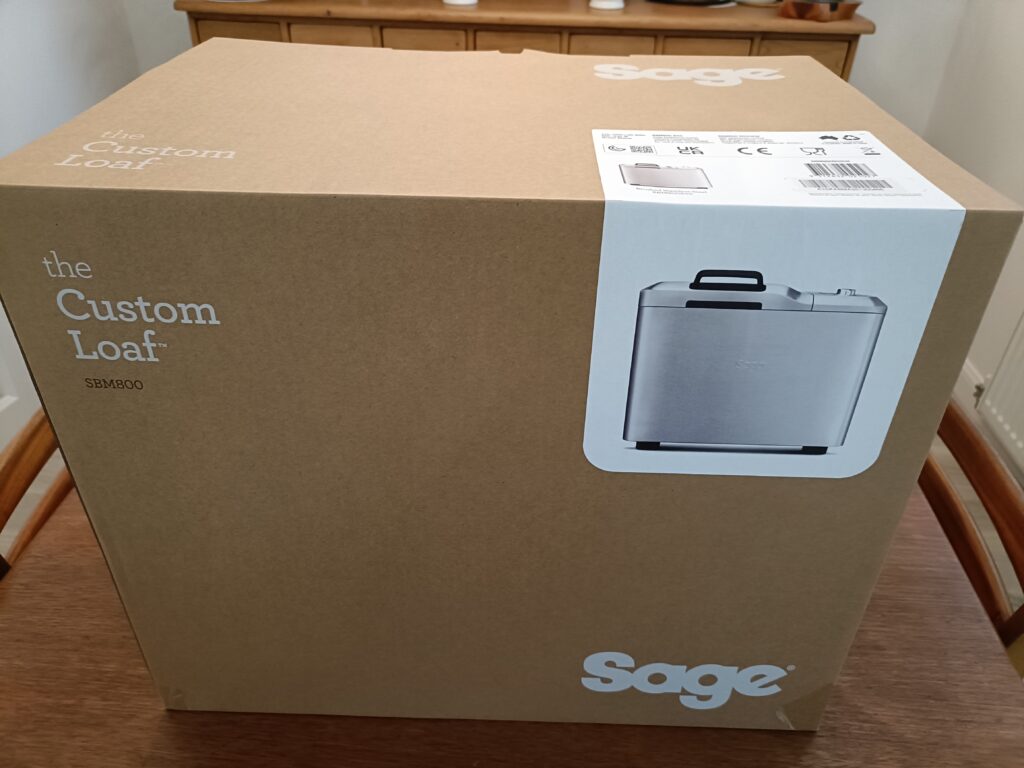
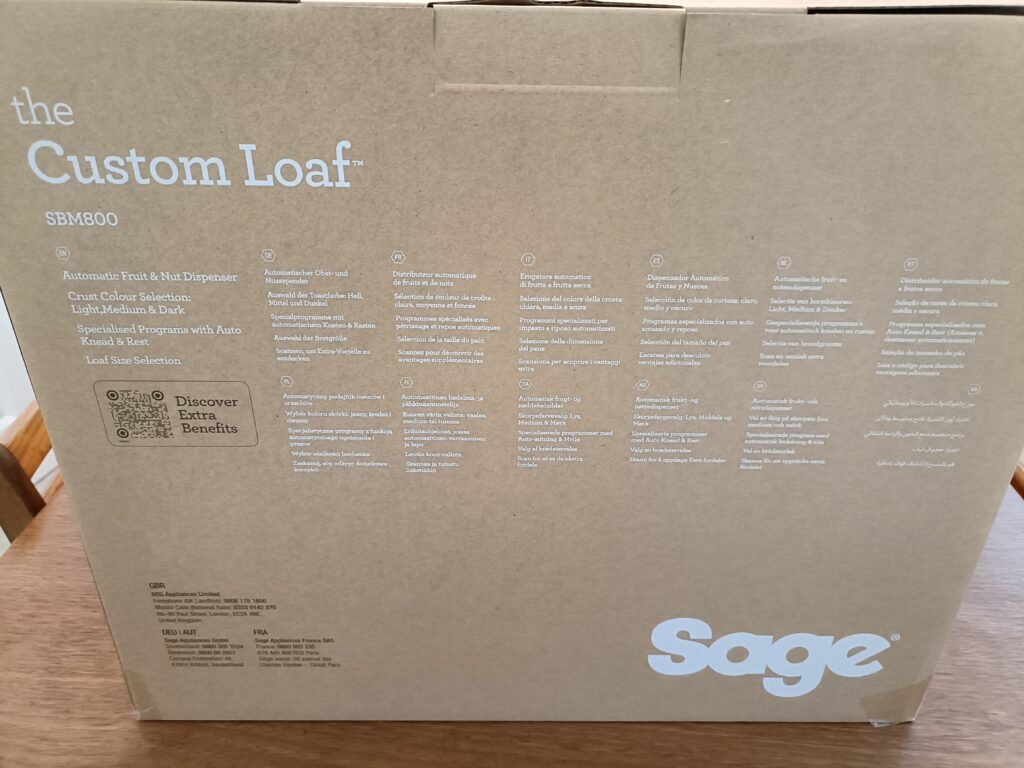
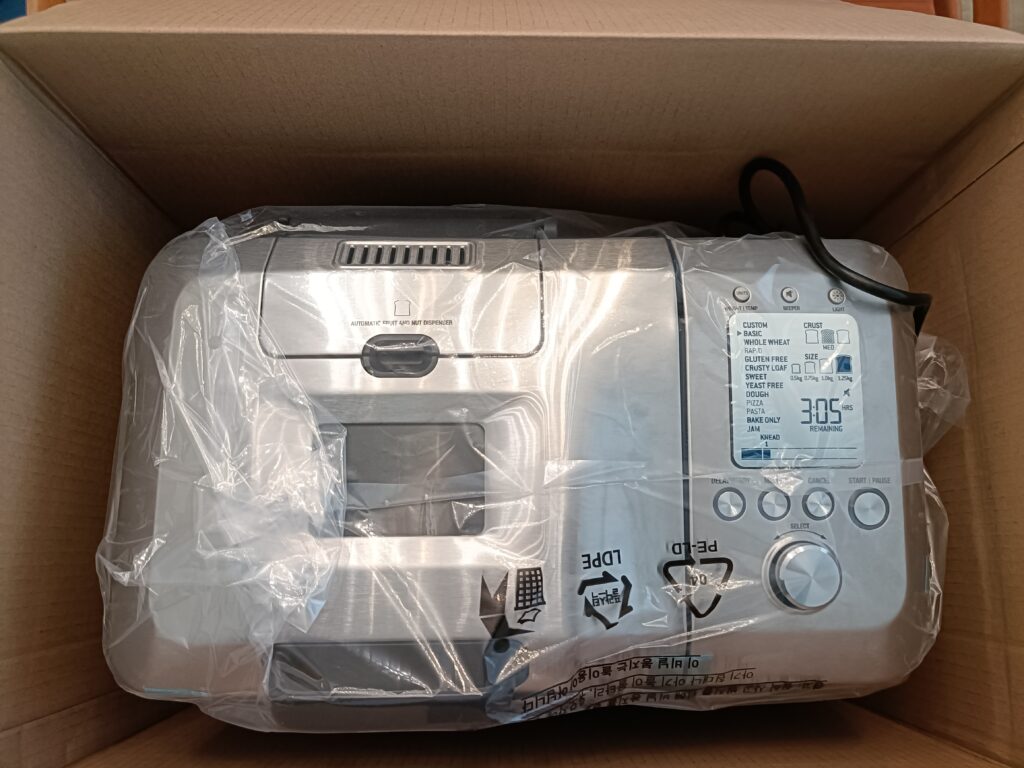
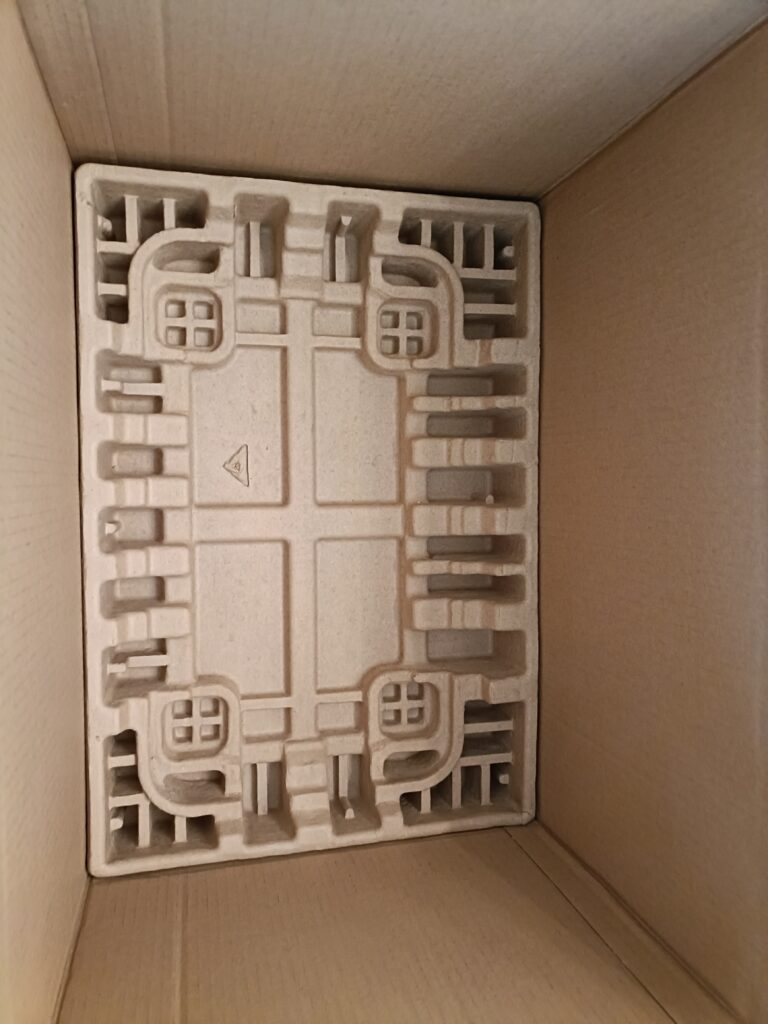
The packaging used by Sage was good at restricting movement of the bread maker in transit, as well as protecting the brushed stainless steel surfaces from scratches. As a result, the product was in pristine condition when I removed it from the box, ready for use.
I was pleased to see that the internal packaging was cardboard-based, meaning it was fully recyclable.
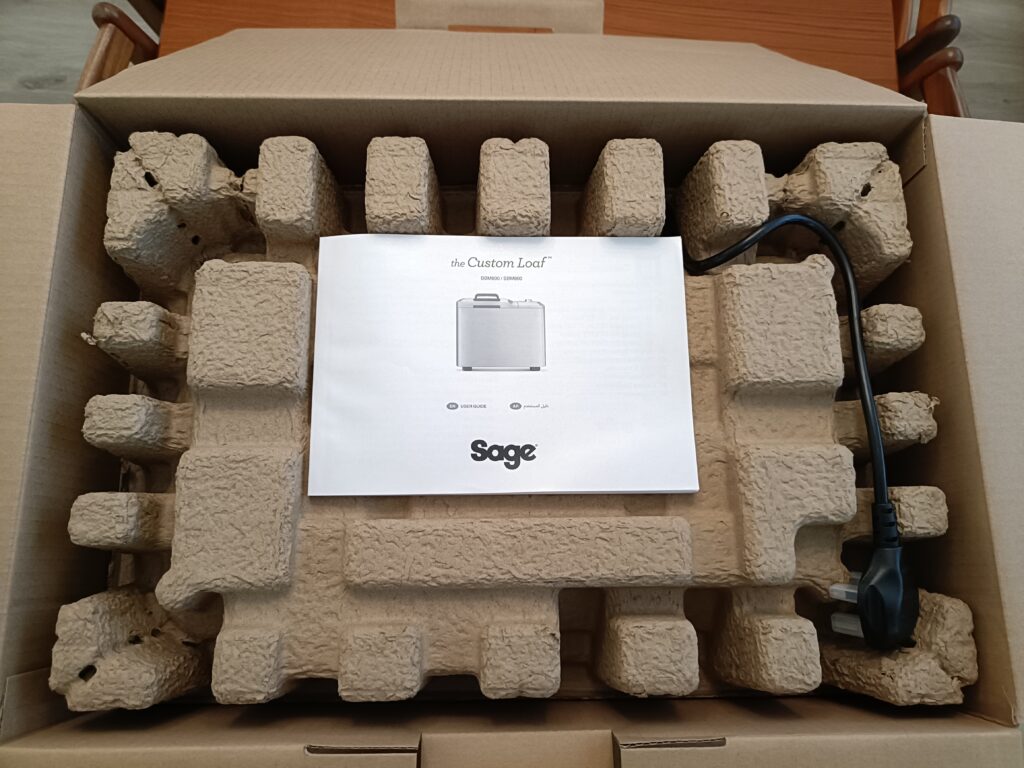
What’s in the Box?
Sage Custom Loaf™ Bread Maker
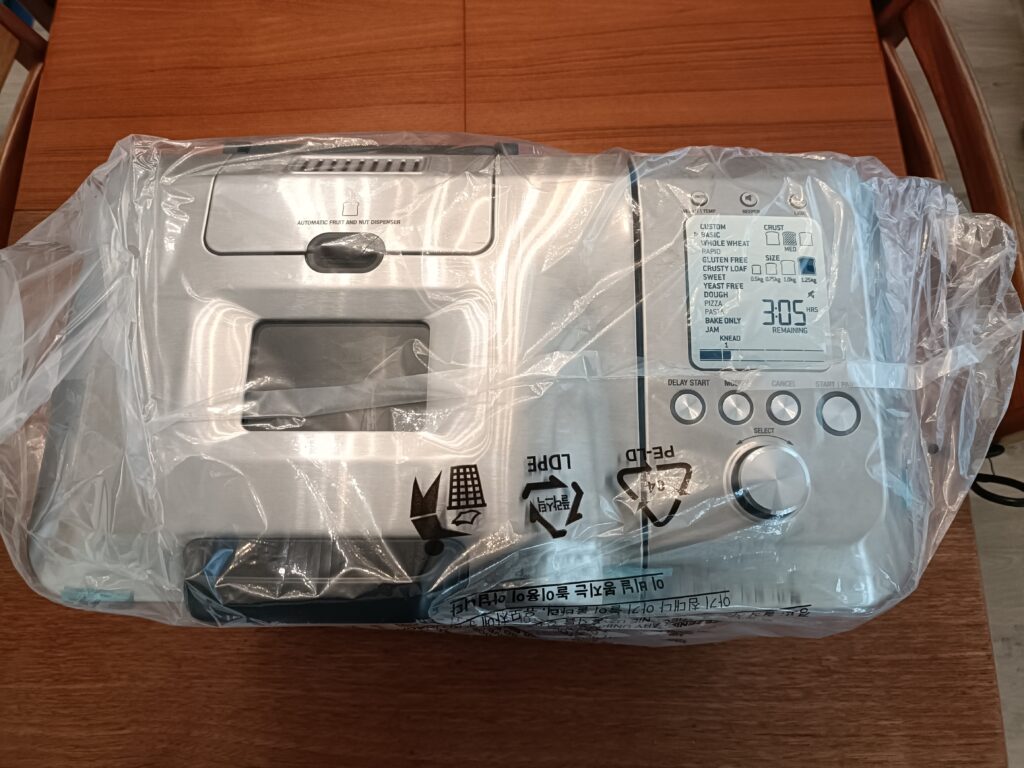
I think the Custom Loaf bread maker by Sage looks great. It’s a brushed stainless steel colour, which I feel looks really smart and fits well in our kitchen theme.
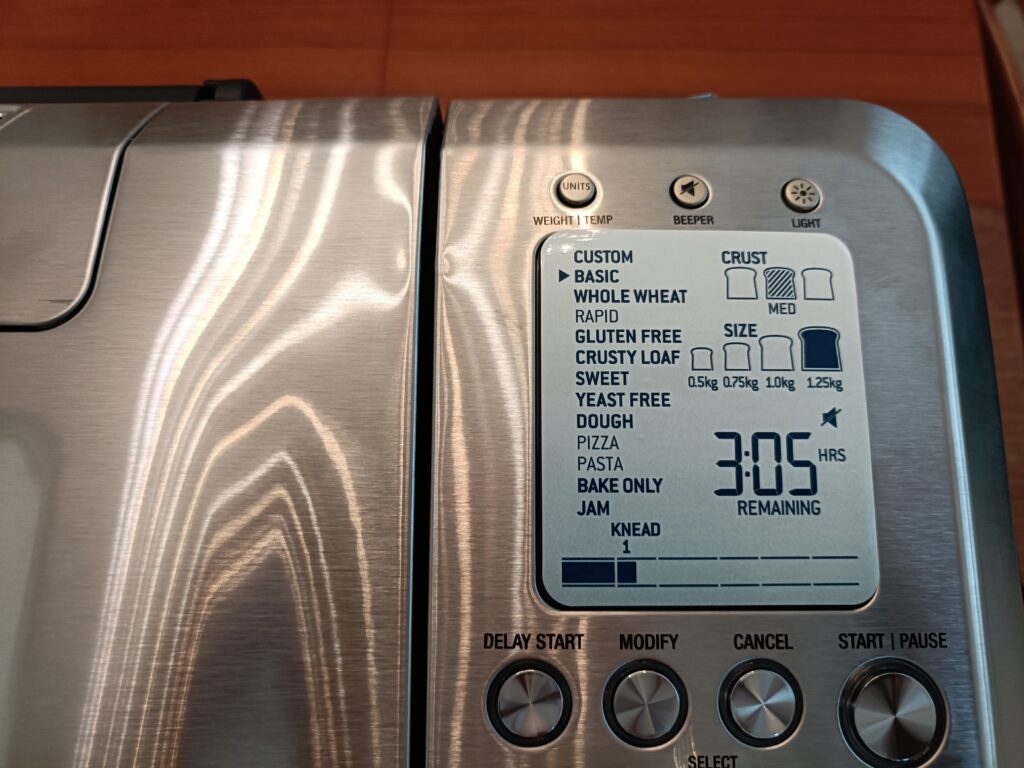
The control panel looks very clear, with lots of information relayed through the LED screen, using dark letters over a light background. It’s easy to select options through the rotary dial, and to press the buttons to select options. They respond really well.
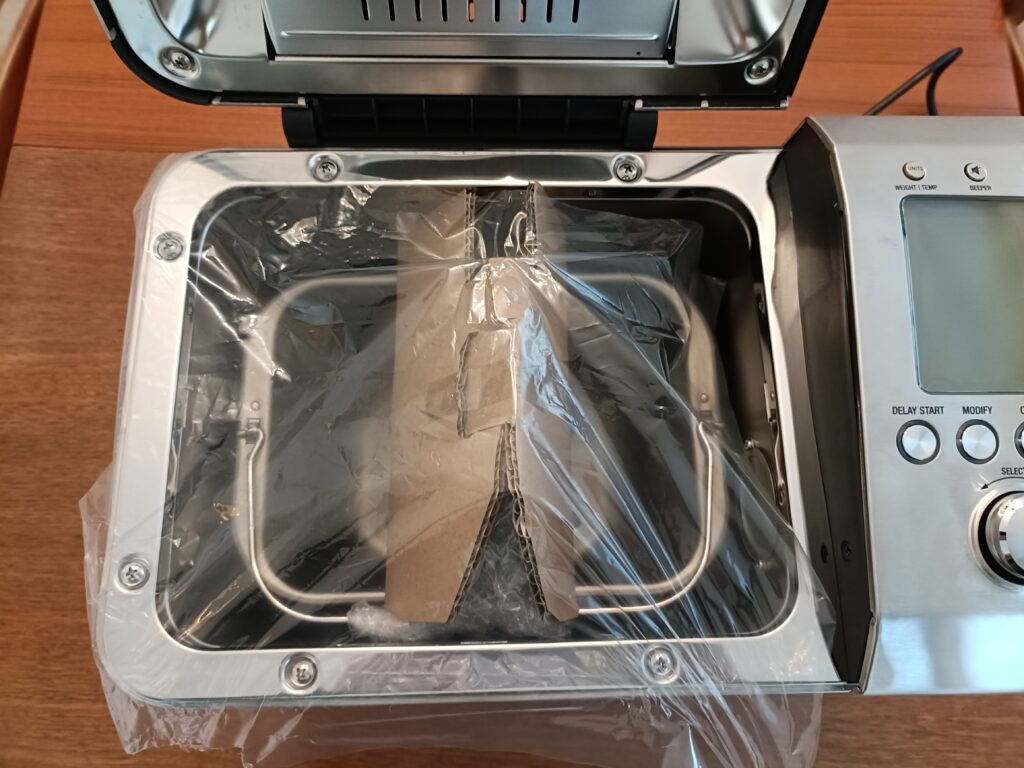
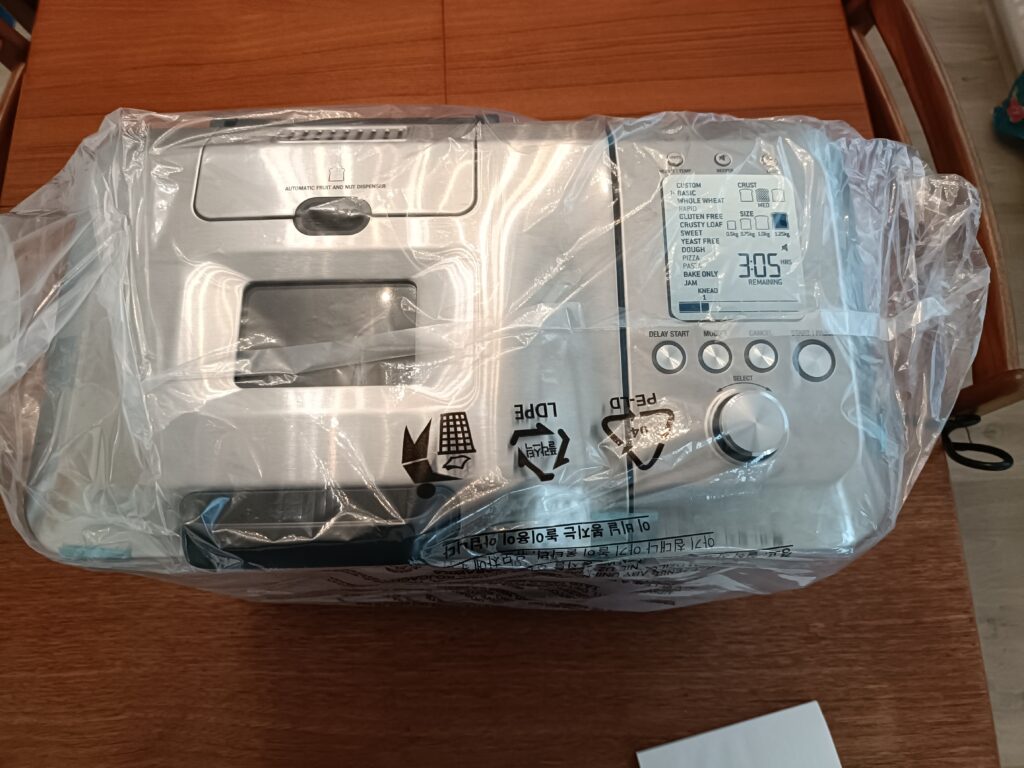
The whole bread maker comes protected in plastic. Plus the LED screen has an easy to peel sticker to protect it, with graphics showing what the screen will look like in use.
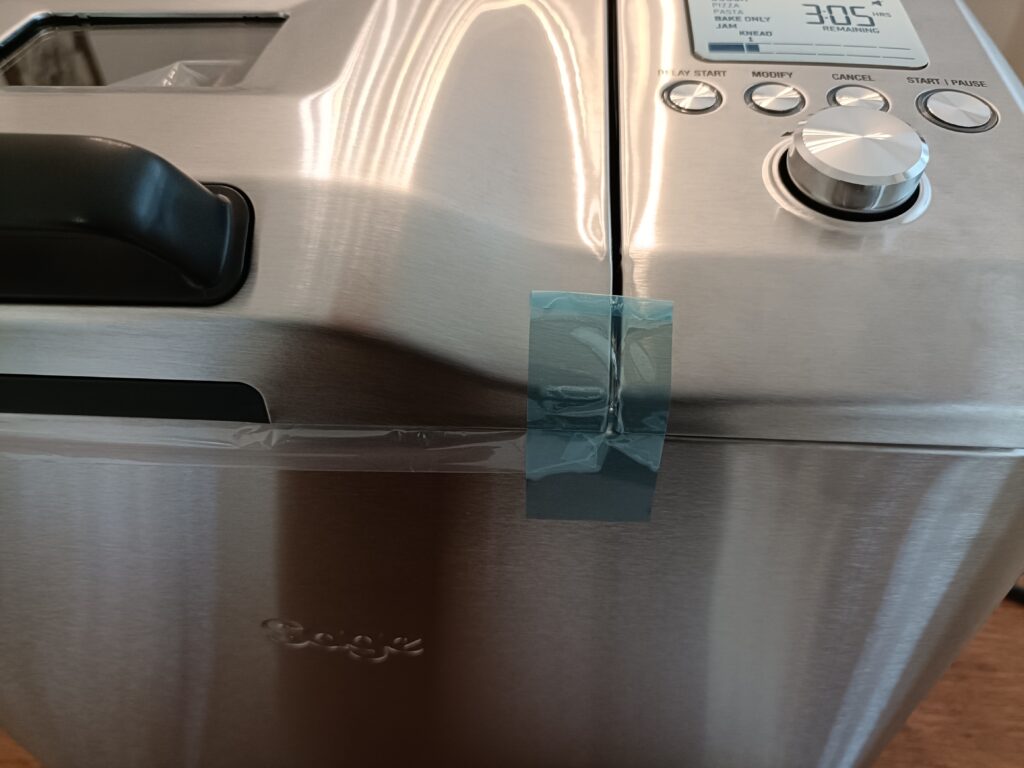
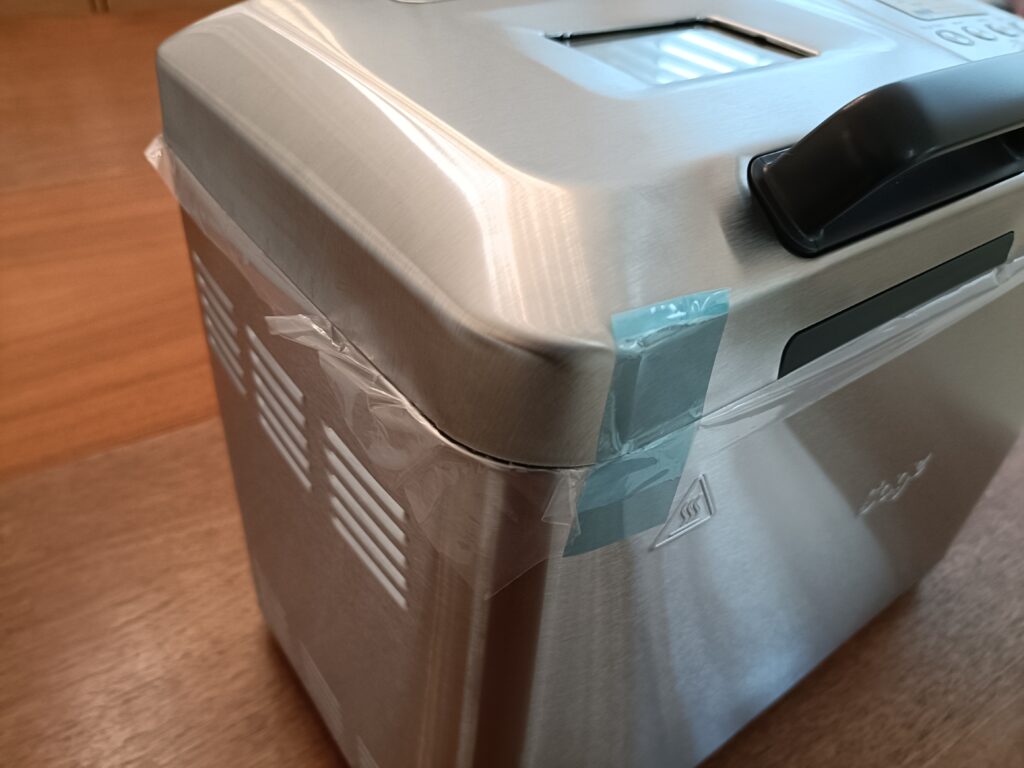
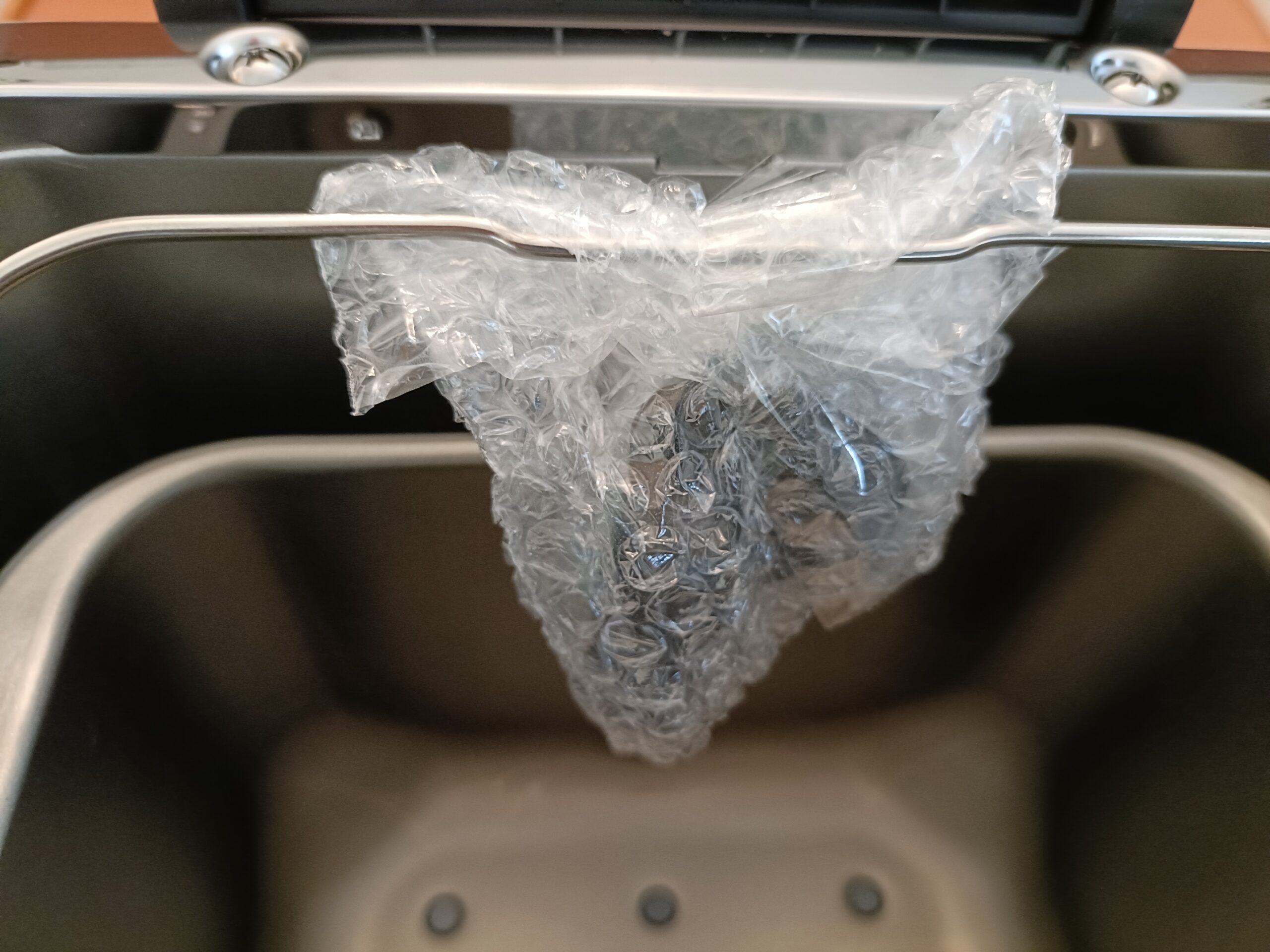
Easy-to-peel blue tape is used to secure openings during transit. In addition, the bread pan has cardboard protection over the kneading blades that are held in bubble wrap. These are all protected by a plastic covering. These all need to be removed before use.
Utensils
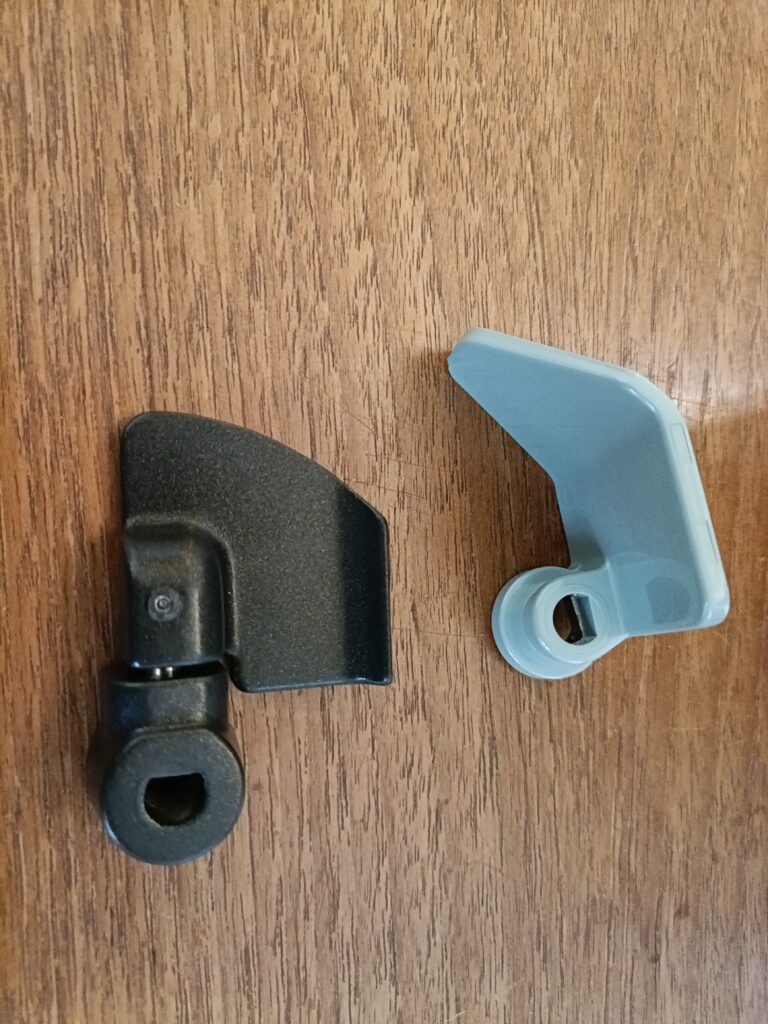
Stored in bubble wrap attached to the handle of the bread pan, the kneading blades are well protected within the bread maker. There are two kneading blades, a collapsible blade for loaves of bread, and a fixed blade used for jam making.
Using the Sage Custom Loaf Breadmaker
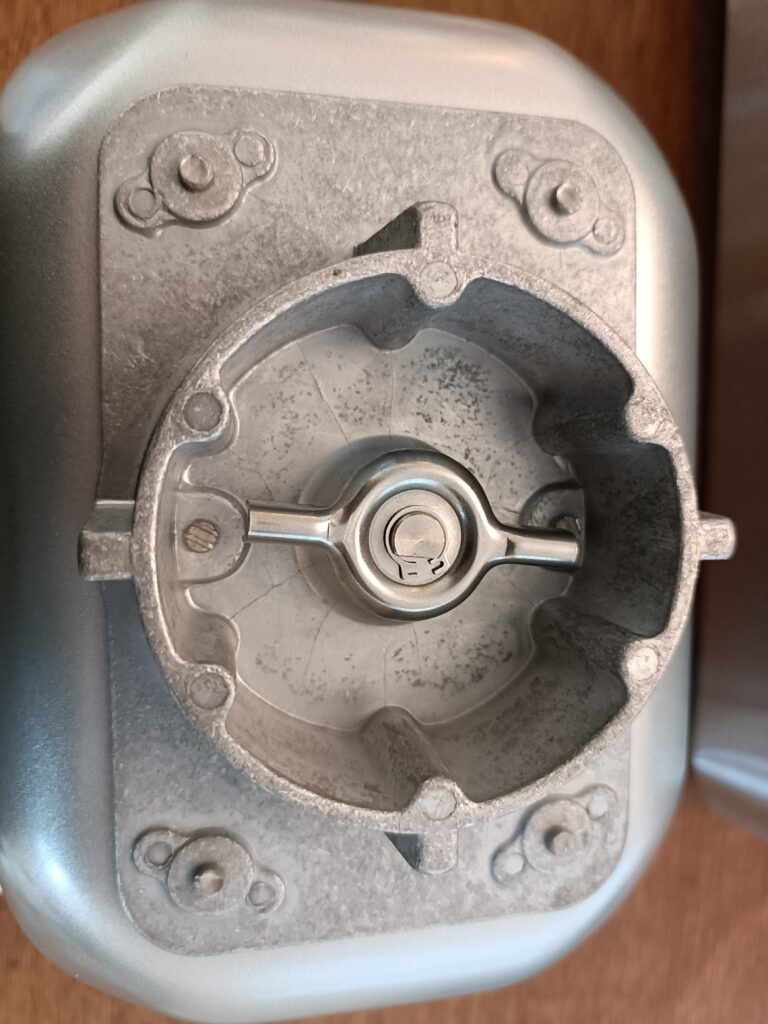
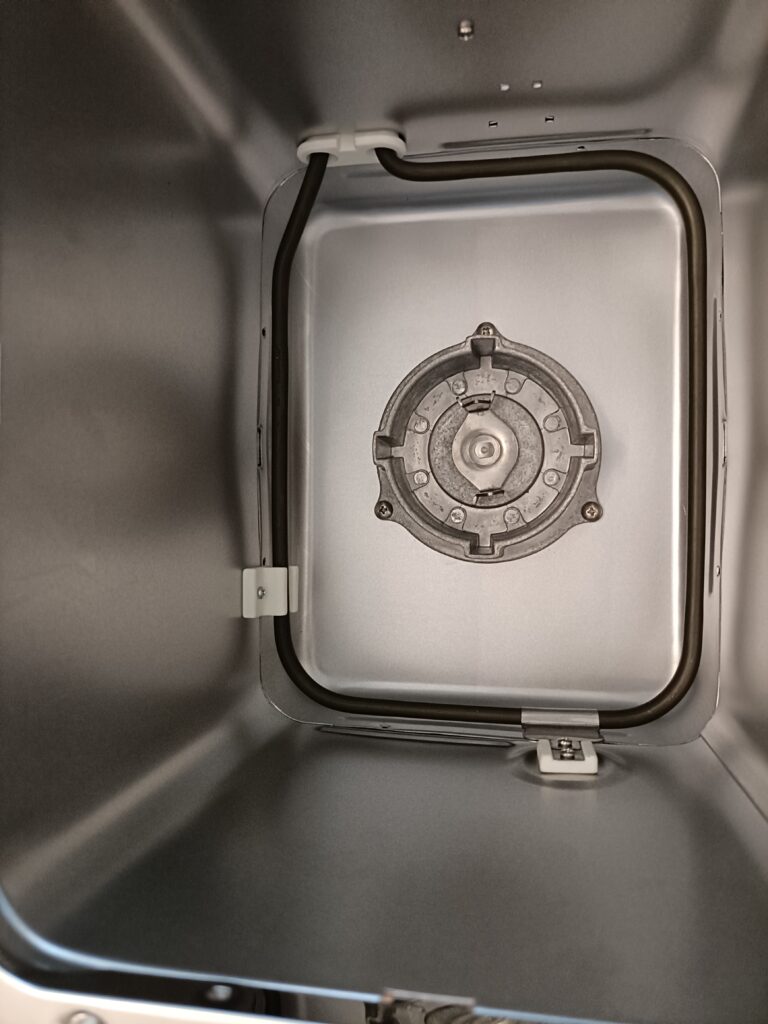
Within the breadmaker there is a heating element surrounding the edge of the space. In the centre is a circular mechanism for the bread pan to slot into.
Underneath the bread pan is a rotatable bar, which needs to be slotted into the mechanism at the bottom of the breadmaker main space. It fits in easily, but you may take a few attempts to get it to slot in perfectly.
Once in place you can slot the kneading blade onto the small rod protruding from the bottom of the bread pan. The rod has a half-moon shape, which is mirrored by the kneading blade, meaning it slots snugly into position.
The kneading blade for bread is a very clever piece of kit. It is collapsable, meaning once it has finished its job of kneading the dough, it is able to be collapsed by the breadmaker. This means that you don’t have a large hole in the middle of the loaf caused by the blade. You do still get a small hole, but not as big as breadmakers without a collapsible blade.
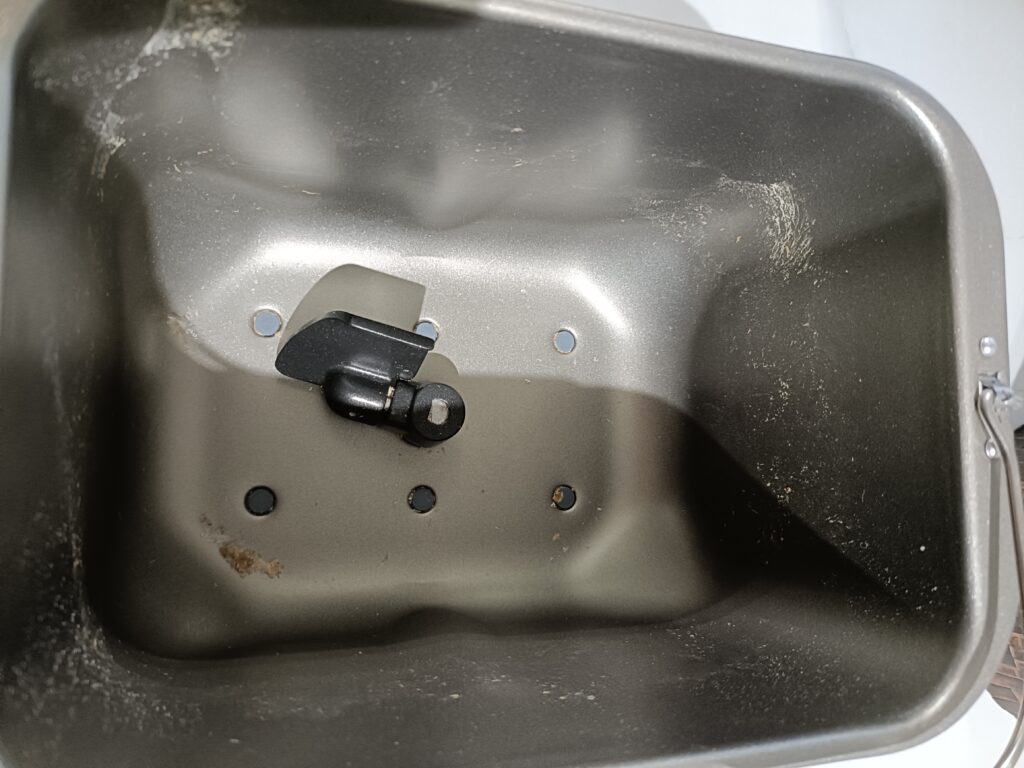
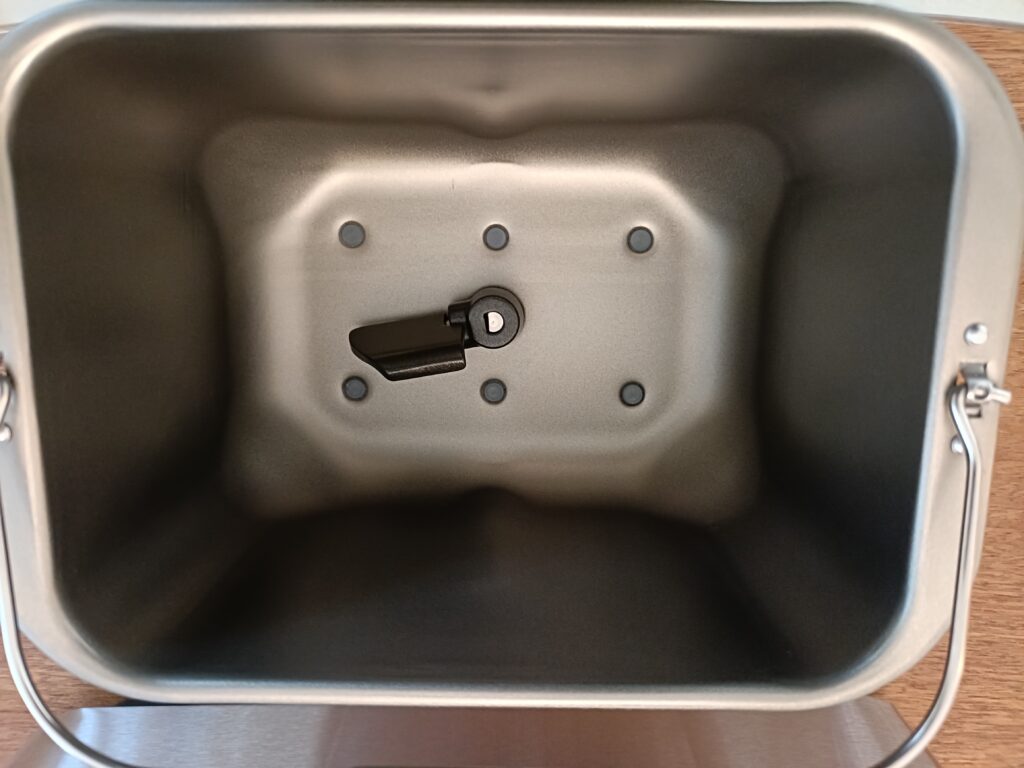
Whilst this is a great feature, it does make for a kneading blade that has some gaps within the mechanism. This means it needs a good clean after use to clear old bread out from within, allowing the kneading blade to move freely.
As yet, I am still to work out the best way of easily doing this. I soak the blade to soften the bread mixture within, then use some tiny bottle cleaning brushes to get into the gaps. It still takes me a little while to clean to my satisfaction.
My first loaf
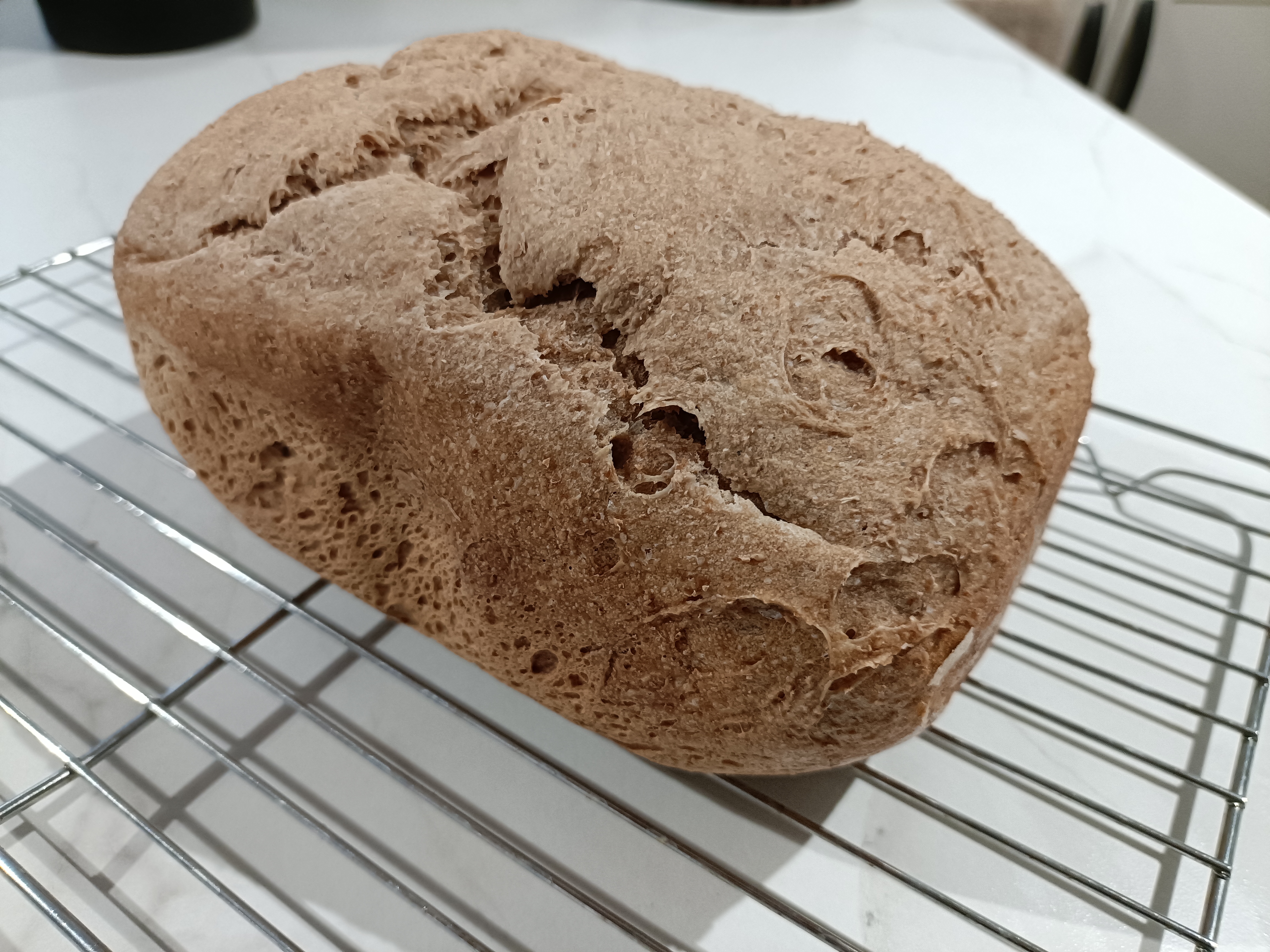
It was incredibly easy to use the Sage Custom Loaf breadmaker to produce my first loaf of bread. The rotary dial to control selections was easy to use, rotating to highlight an option, then pressing the dial to select the chosen option.
I chose to make a spelt loaf, which is an old grain which required a brown loaf setting to be chosen. I selected a quick option, which took just over 2 hours to bake. This loaf (shown left) was a small one, with a medium crust bake. It was a perfect size, texture and taste!
Following the recipe, I added the ingredients to the pan in the correct order (which is very important). Of course, make sure you’ve got the kneading blade in place before adding the ingredients!
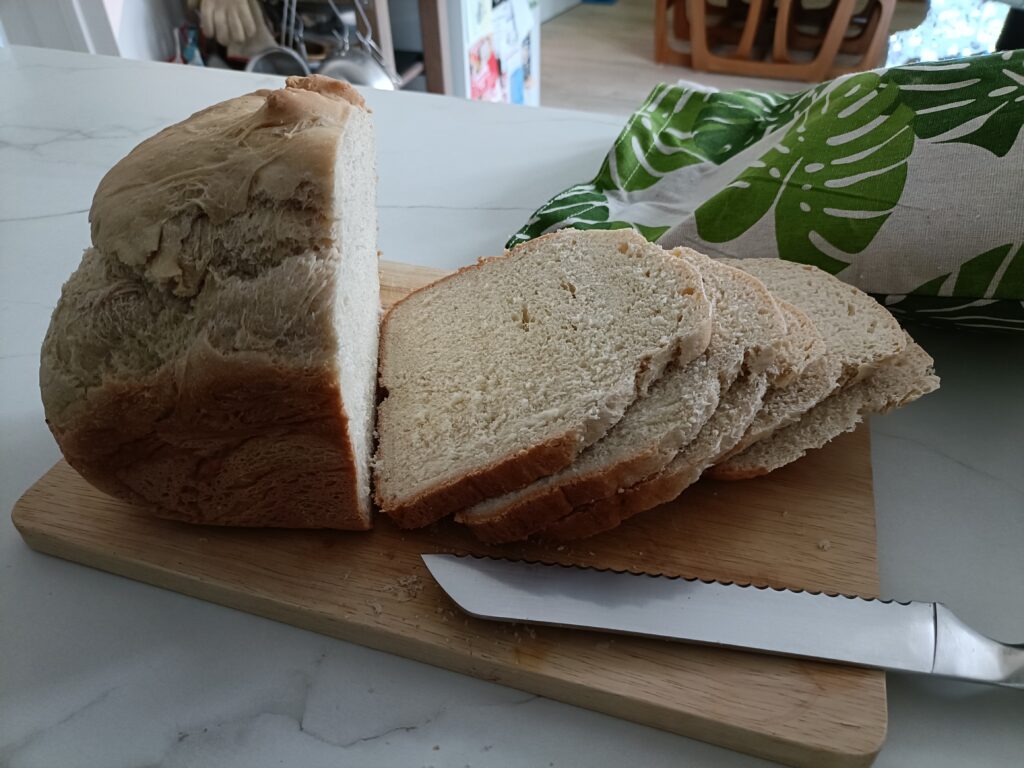
The correct order was: Water, vegetable oil, salt, sugar, flour then yeast. The water is recommended to be at 27 Celsius, so you will need a thermometer to make sure it’s correct. My recipe required 360ml of water, which I zapped in the microwave for about 40 seconds to get it to the correct temperature. This is important to ensure the yeast is active, but not overly so.
Shown in the left here is another loaf I made, using strong white bread flour. It was a much large loaf, but could still be baked in the same timeframe, just over 2 hours. It was equally as tasty as the first spelt loaf, and had a great crumb when sliced.
Sage Custom Loaf Breadmaker
The Sage Custom Loaf™ is a superb breadmaker, although it comes at a premium price. However, that reflects in the quality of the components and the many features available with this breadmaker. I regularly eat bread, and whilst it’s not an expensive product in the shops, it is a highly processed food item – which I am trying to reduce my intake of. This quality kitchen tech allows me to produce my own bread from just a handful of ingredients, which I can keep close control over.
I haven’t used the machine to produce items other than regular loaves of bread. But it does have a huge range of items that it could be used for, such as:
- White bread
- Whole wheat bread
- Gluten free bread
- Crusty loaf
- Sweet bread
- Yeast free bread
- Dough
- Pizza dough
- Pasta
- Jam
As well as the kneading paddle, the pan itself needs careful cleaning after use. The pan shouldn’t be immersed in water, to protect the mechanism underneath. But the inside of the pan should be cleaned, so I use a little soapy water inside, and a cleaning cloth to clean. I then leave to drip dry on a drying rack.
I am immensely happy with this purchase, and have been using it on a weekly basis to bake loaves over the last 3 or 4 months since purchasing. Whilst it was a lot more expensive then the budget options I was originally looking at, I am extremely pleased that I chose the Sage Custom Loaf™ because it has consistently produced exceptional bread, without the need to practice to find the right formula, and waste ingredients in the process. From the off it has produced wonderful loaves of bread. The only proviso is that you need to ensure that the water is at 27 Celcius.
Overall, I wholeheartedly recommend the Sage Custom Loaf Breadmaker.
Sage Custom Loaf™ Breadmaker Specifications
- Capacity
Loaf Sizes 250g–1.25kg - Construction Materials
Stainless Steel Housing - Dimensions (WxDxH)
41.7 x 24.4 x 33.8 cm - Settings
13 Automatic Settings with: 3 Crust Colour Options, 9 Custom Settings - Power
220–240 Volts, 830 Watts. - Warranty
2 Year Repair or Replacement Warranty - Accessories
Collapsible paddle for bread & dough settings. Mixes ingredients then collapses before ‘bake ‘ function to allow for the dough to expand
Fixed Paddle for Jam only.
Guy Goes Green
If you found this review useful, you may like to subscribe to my YouTube Channel, Guy Goes Green.
Like most people, I’m not perfect, so I’m going to try and change my life to make less of an impact on the earth. One small step at a time. Join me as I look at ways I can reduce my impact. What works? What doesn’t? I’ll share my experience, to help you make informed choices for yourself. Subscribe now, and come join me on the journey!
Watch now at Guy Goes Green.